Friday, March 4, 2011

Day 15: All the Warmth in England

Family
The "young people"
As I sat on the carpet of my uncle’s living room floor, looking at all the family photographs on the wall, I felt an unexpected ease and familiarity there. This was the first time I had come to my uncle’s house in England. The gloomy grey had followed me from Islington, but somehow, right now amongst the porcelain statues on the shelves, the mischievous cat scratching at the sofa, and the background noise of a ridiculous game show on called “Take Me Out” streaming from the other room, I felt at peace.
My uncle's house
My father had known my uncle long before my sisters or I were born. Both were young physicians in London in the late 60’s just starting off their careers. Now both my dad and uncle had daughters who were physicians. The torch had been passed, but the flame of stories and memories as medical students, and young doctors, had never gone out.   I can remember so many of the stories my parents would tell me about their time in London, of spur of the moment “cook-ups,” of nights out on the town, of trying to find Indian ingredients in a less than tolerant British society in those days, where the cold shoulder of prejudice and discrimination was all too common, but never got in the way of their dreams.
Lunch at the Calcutta Club
Hearing my uncles and aunts speak of my parents, here, away from them in England, made me curious to know more, and nostalgic for home. They spoke tenderly of the past, of my mom’s incomparable cooking, of my dad’s sense of humor, of my older sister’s incessant crying. They spoke of crazy times in the hospital and how bitterly cold England seemed to them coming from Calcutta. 
Telling me stories about my dad
They spoke of the past in such detail, it was like it just happened. It was a trip down memory lane I was all too happy to take with them. 
In the backyard, the pool was tightly covered, awaiting the summer for its next unveiling. The leafless pear and apple trees stood still in rows courting spring for their next performance. 

Army of ash trees
Cows grazed beyond the next field. The flat pastoral landscape in the distance was abruptly contrasted by the tall forest of stark, naked ash trees from next door. Growing like an army out of the ground, they looked like soldiers straight at attention. I was mesmerized by them. It was too cold to stand outside for much longer, so I took a few photographs and retreated indoors.
Uncle poured me a glass of champagne, no special occasion, just for the celebration of family and for togetherness. From sitting around a table at the Calcutta Club, eating the warm and spicy offerings off the Indian buffet of naan and fish curry, to the mandatory chai and shandesh that followed when we returned home, everything was as familiar as if I had done It a hundred times before.
All the warmth in England
The “young people” took a ride over to Bluewater Mall. We had had our fill of the requisite interrogation on why we were not married yet. We looked around John Lewis, imaging interior design schemes, talking about lifestyle and inflation, about new movies and music. We talked about Audi models and the price of gas, about ridiculous commutes and the pluses and minuses of our current career choices. We talked about the things that mattered most, and those that mattered least. I was across the Atlantic, in a first-time unfamiliar part of England, on a freezing cold evening, with no clue how I had gotten here, but I might as well have been right at home. Here, today, I felt a transcendent ease that surpassed all lines of space and time and citizenship. There was the natural comfort of a commonplace Sunday. An effortlessness that this had happened a hundred times before and would happen a hundred times again. This was family and as far away as I was, this was home.
The backyard orchard
Hearing my uncle speak in Bengali as he poured me another glass of champagne, while my aunt spoke of the upcoming royal wedding throwing cat treats on the carpet for Minxy to catch, hearing the “young people” roll out their running commentary on the crazy television show we were watching, seeing them all together here, I realized, I didn’t need a scarf or a hat or a wool coat, I didn’t even need that portable furnace I kept joking about to carry with me. 
My uncle


Here, in my uncle’s house, sitting in the middle of the floor on one of the coldest nights since my arrival, I realized, I had found all the warmth in England I would ever need.

Thursday, March 3, 2011

Day 14: The Cathedral of Trees

The Cathedral at Highbury Fields
Pho for lunch
The sun came out today and made the possibility of an adventure more enticing. This however was a study day, there wouldn’t be time for an adventure. I gathered up my books and my camera and headed for the tube. Halfway to the station, with the lumbering weight of my camera in my pack, I wondered why I had even brought it. 
She finally gets a hat
The only plan I had was to finish all the reading I had assigned. I headed out to Shepherd’s Bush to find a place to study. I hadn’t been out there yet and although I was told it was quite a bit of a trek to get to from where I was, there was a big mall there with everything in it. 
Why not, I thought, let’s go check it out. The Westfield Mall off the Central Line in Shepherd’s Bush, is just like any other mall, Westfield or otherwise. It is well stocked with every luxury store, every bath and fragrance store, every food court store and a staple of rebellious teenagers with empty backpacks and too much makeup on, smoking outside the front doors, to complete the total mall picture.
If you hadn’t told me I just took two tube lines and passed stops called “Oxford Circus” and “Queensway” to get here, I would have thought I was at the Beverly Center across the street from my apartment in LA. There’s something to be said about the familiarity of a modern mall. It's International Genericism and Global Mass Marketing at its finest.
I decided on pho for lunch, which was surprisingly good and warmed me immediately. I took out my books and did some reading for a few of hours. It was Friday afternoon and the mall was starting to get loud and crowded. The movie theater upstairs was starting to form a line. I better start heading back soon, I thought. As I was still in need of a hat and other warm accessories, I thought I’d do a little shopping on my way out. I went to the familiar H&M and bought a hat and mittens and a scarf all for £1 each!! Wow, what a deal considering I’d likely never be wearing these when I returned to LA. Pleased with my find, I headed back.
After a while people are the same everywhere you go. I mean at first, when you land on foreign soil, everything is so novel and fresh. You notice all the differences compared to home and that’s what makes it exciting. But after a while, if you stay long enough, you start to notice all the similarities as well. Teenagers still smoked outside of malls after class, the working stiff still met his mate at the pub for happy hour, mother’s still worried about getting their kids back from school on time, Friday night dates still meant dinner and a movie, and H&M recruited the same demographic of consumer as it did at home, the gang of girlfriends shopping together while talking on their cell phones to the other gang of girlfriends who hadn’t made it to the mall yet. Everything’s the same after a while . . .
Now I would have kept on that line of thinking had I not gotten off the tube at the Highbury and Islington Station exactly as the sun was setting over Highbury Fields. At that moment I witnessed a sunset unlike any I had ever seen before. The moment I set foot on the grass the rest of the city fell away. There was only me, the coming night, and the silence. It was for these last few moments of the day that I was grateful I lumbered my camera in my pack.The last pink shades of the day, climbed into the blue sky and leaked away into the orange light. The radiant orb of the sun boldly diverted all attention to itself, hanging against the line of London planes like a misplaced orange marigold on their branches, the trees stayed silent, reverently allowing the sun its final curtain call.
Lined alongside the central walkway, they worked instead to build a holy place, a sacred scaffolding of light and lines that would house all who came to worship there. Their stately trunks formed the columns of their growing cathedral, their tracery branches created their buttresses. They rose and curved to high arches, building their roof. Like school yard girls playing London Bridge, they leaned across the pathway, interlacing their hands in a common effort. Leaving nothing undone, the cambers of their blackening branches traced leadlight lines. The setting sun, obliging their stained-glass intentions, offered them glass in hues of pink and blue and orange to fill in their spaces. The cathedral of the trees was now complete. But it didn’t last long. In the fading light of half-dusk, their candles lost their glow. Their engineered masterpiece faded into a cold, black night, their necessary transience beseeching worshipers return another day.
I was wrong that everything was the same after a while. Nothing was like this field today, quiet in its moment of final prayer. Nothing would ever be like it again. Never again would the setting sun build a cathedral in Highbury Fields the way it built it today. The congregation of worshipers would change, or not come at all. 
The illuminated “windows” would pick new colors and the swaying branches would not remember their original design. But here, today, in the evanescent exit of the setting sun, I was the witness. A worshiper in this field of fading light that saw a temple rise and fall, its temporary edifices the evaporation of a moment, its sacred offering the gift of all time.

Wednesday, March 2, 2011

Day 13: The Long and Ancient Backbone

Natural History Museum
The South Kensington station was a frenetic state of confusion as baffled travelers tried to find their way out of the District Line. I was grateful for having reached my final destination and scrambled out of the center of chaos as quickly as I could.
Diplodocus
Up on Cromwell Road, the crisp chill of the wind, flash-froze the last remaining heat the underground had entitled me. 
I made a sharp turn at the top of the street, scurried through the Imperial College of London, and continued shivering my way down to the Victoria and Albert Museum. 
Cromwell Road was a wide and active street, lined with prim and elegant consulate buildings.
As I passed by the embassies of Yemen, Oman, Venezuela and France, I noticed a tall brick building with large edifices and colorful stained-glassed windows. It looked like a cathedral or a castle. 
But these days a lot of buildings were beginning to look like cathedrals or castles to me.
The Long and Ancient Backbone
The stark, black branches of the tree that grew in front it, superimposed against the “castle” walls, was almost haunting. “Castle” + haunting tree + bleak day = I must go in. As I neared the front entrance, I realized it wasn’t a castle at all. It was the Natural History Museum (close). The front hall of the Natural History Museum is immense. 
Aside from the 90-ft long Diplodocus dinosaur skeleton that greets you the moment you set foot in the front hallway, the first thing you notice is how immense it is. The brown and red brick walls that created the space, curved into tall arches that ended in sky lights across the ceiling. 
The echo of footsteps and the machine-like rumble of the moving crowd, bounced off turns and crevices in the arcade, reminding me of a railway station.   
Paleontologists
The falling sky that poured in from the top, distributed the daylight with an even hand. Numerous children in matching smocks and shirts oooh’d and ahhh’d every dinosaur bone they came across.
I couldn’t tell you what any of the exhibits on display were, because I didn’t go into any of them. The central hall held me captive and fixed me there. Held hostage by the enormity of the great space, I circled it twice watching the walls as the light moved.
Stacked beyond the round arcs and columns, were shifting staircases running up and down the length of the room, reminding me of Escher’s infinite steps.   
Dancing monkeys
On careful observation, the revelation of carved, stone monkeys clinging to tracery sides, was as unexpected as it was whimsical. 
St. George slays the Dragon
A display of primate skeletons hung from the ceiling. The bold, white lines of their plastic bones against the dark shadows of recessed arches made a dramatic and potent contradiction. I stared at them affirmatively, awaiting their joints to come to life. The entire moment a hint of “Jurassic Park” meets “Night at the Museum.”  But of everything I saw, it was the Diplodocus skeleton that seduced me most. Its tremendous, haunting, presence commanded the center of the room. Its imposing, osseous enormity was too much to ignore. As I stood underneath its behemoth, grey tail, I looked up. The disc space between its bones narrowing as it made way to its final point. Blocks of black bones created an outline more threatening than the actual beast itself could ever have been. Aligning myself carefully in the middle, I crooked my head all the way back. Down the center of the vaulted ceiling ran the spine of a great dinosaur. Two ancient, parallel spines, side by side, holding and supporting the structures that contained their mysteries. The first, a spine of carefully architected stone and engineering, the second, a spine of a prehistoric immensity. Both relics of a strongly created past. The thoracic bones supporting the ribcage of a formidable beast, creating an empty thorax that once held its heart, its huge innominate bones like modern sculptures onto themselves. The structural arches of the building, carved a hollowed space, preserving the artifacts of time in its great front room.  Both mythological vaults of cavernous space, the museum arcade and the paleolithic thorax, stored within their tremendous crypts, the primeval stories of our beginnings and the primordial covenants of our past.
Escher's Infinite Steps
Walking through, what seemed like a warehouse of misplaced and forgotten sculptures, in the Victoria and Albert Museum, I realized that history was full of terrific “spines,” the central backbones of support, on which stories were built. The massive and domineering cast of Trajan’s column, halved for display in the center of the room, was one of them. 
The Trajan Column
The imposing and looming 98-foot tall column, that still stands in the center of Rome today, built in 113 AD, was the vertebral column of the city, the center spine on which all important revolutions of thought and structure came from and toward. The golden-titled spines of ancient and dusty tomes, shelved in upstairs libraries, were the backbone of history’s greatest discoveries. Their kyphotic binding holding together the pages of treasured secrets and ancient histories.
The "warehouse"
The lumbar curve
Carved lumbar backs of stone and bronze, were the precise technique of Master sculptors. Their calculated dimensions ensured the entire piece would balance on the solid center backbone onto which marble stories could be told. The vaulted ceiling of the Natural History Museum, the enormous Diplodocus vertebrae, the Trajan column, the leather bound encyclopedias, the spines of Master carvings, these were all historic vertebrae, the long and ancient backbones of the past that ran down the center of time. The backbones upon which stories of the past were tied to with the spinal cords of thistory.
The Lion's back
The hallway curve
As I ended my day, taking a few last shots of the lobby entrance, I tucked my camera back into my bag. 
Interred Knights on their backs
Pulling up my backpack, I headed for the tube, carrying with me the stories of my day, guarding them safely against the center of my back.
The writing on the wall

Tuesday, March 1, 2011

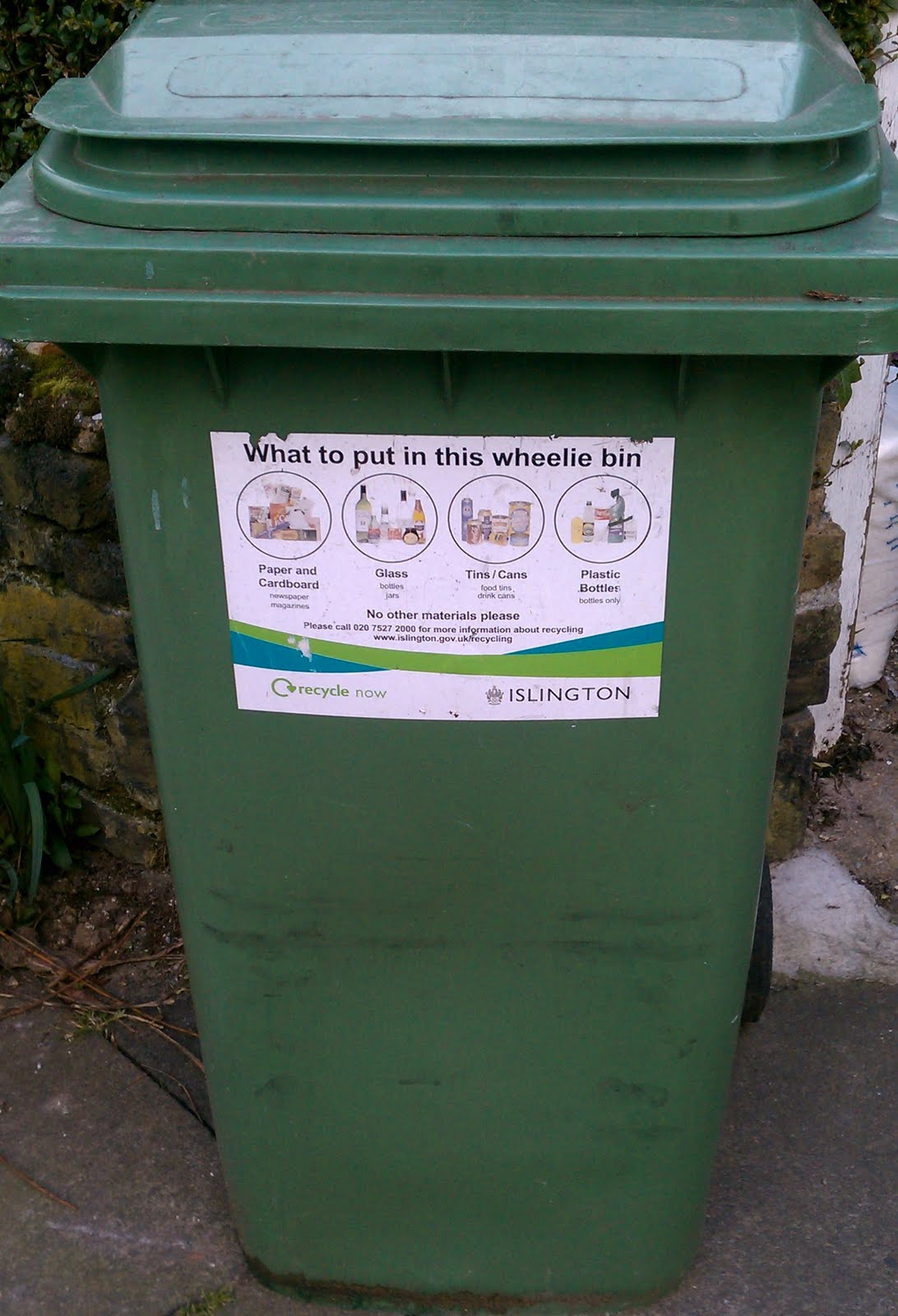
Day 12: There are No Trash Cans in London. That's rubbish!

Litter
My favorite lunch spot
My new favorite lunch is an enticing, warmly toasted, brie and tuna baguette from a little hole-in-the wall spot called ‘Pain du Jour” two blocks down from campus on Goodge Street. The queue is almost always out the door at lunchtime, but it moves fast, and for about £2 you can get the freshest, warmest, tastiest, sandwich you’ve had this side of the Atlantic.
A few days ago, on my lunch break between classes, I made my way down to Goodge Street, bought my now standard fare of warm baguette and Oasis juice box, and did a little window shopping on Tottenham Court Road before I headed back to class. 
As I casually munched my sandwich and sipped my orange drink, perusing the storefront displays of Waterstones, Natuzzi, Kingsley Photographic and Cards Galore, I realized I had about 5 minutes left before I needed to get back to class (staring at camera storefront displays can really make the time go by)!
Rubbish
As I unattractively inhaled the remainder of my baguette and juice box, I quickened my pace, and headed straight for Keppel Street. 
Waste
Wiping crumbs off my face, I looked around for a trash can to toss my juice and wrapper in. There were none in front of me, but there would be one round the next corner I was sure. I turned the corner steadied for the throw-away and still no trash can. Hmm, perhaps there would be one on the next block. I walked on with crumpled paper in hand anticipating a nearing toss and nope, still no trash can. I walked the entire length to class and still found NO trash can! What?! Ok, I thought, I’ll just toss it when I get to the lecture hall. But wouldn’t you know it, that’s right, no trash cans outside the building, inside the hallway, inside the class room or anywhere else (that was obviously noticeable) around the lecture hall! Defeatedly, I zipped my trash in my back pack and went to class. 
Everything else.
On my walk back to the tube that day, I took special care to notice and count all the trash cans I came across (yeah, I know, nerd) and I counted none. That’s right. There are No Trash Cans in London. I have seen “rubbish bins,” “litter boxes,”  “waste baskets” and “recycling containers,” but never have I seen a “trash can.” It appears as though the City has gone to great lengths to neatly label, and appropriately place the proper receptacle for the proper item of disposal to be placed in. 
"Wheelie bin"
This is England after all, even the “trash” here must be cared for with the utmost of decorum and propriety. 
The finesse of sorting and labeling unwanted goods must be adhered to, otherwise all of this planning would simply go to waste. 


(And now I know why: http://www.reuters.com/article/2012/02/03/uk-britain-bins-idUSLNE81203320120203)


 Speaking of waist….
Which one? Yes please.
Yes please.
Mine seems to be attracting the sweetest of temptations lately. Rows of London streets are sprinkled with the sweetest of discoveries tucked away in the most unsuspecting of corners. A serendipitous run-in to a quaint bakery or charming patisserie is one of my happiest finds. Unlike the over-commercialized bake shops of Sprinkles, or Krispy Crème, or the pre-packaged bakery sections of Ralphs, that sell a lot of a single variety, the classic European bakery still maintains it notable charm by serving an assortment of dainty, delicate, tasty, little things. And yes, I am aiming to try them all.
Quiche me.
Pain au chocolat, fruit tarts, cream pies, baguettes, quiche, turnovers, petit fours …all offered up in a single shop window! I wonder if Londoners know how good they have it when it comes to baked goods. Maybe it’s being warm inside a happenstanced patisserie on a cold, drizzly day that makes the hot chocolate taste better, the whipped cream melt smoother or the pain au chocolat seem flakier. Or maybe it’s the friendly waitress at the counter who always seems to have a French, Italian or Russian accent that makes the experience seem all the more authentic. Or maybe its the immediate flood of espresso effluvium melanged with caramelizing sugar that hits your nostrils the moment you enter the door, making you want to breathe in that delicious bakery moment forever, that make the magic. I don't know. But whatever it is that makes the European bakery so unreproducible, I'd like to bring it home with me.  With that said, “one entire patisserie to take away please, with extra whip cream on top.” One sweet dream.