|
| The Royal Observatory, Greenwich |
Walking through the expansive and verdant grounds of the Royal Observatory in Greenwich, up the hill towards the large red ball on the Flamsteed House, I imagined what it must have looked like a few hundred years ago. I imagined it looked just like this.
 |
| Greenwich Mean Time |
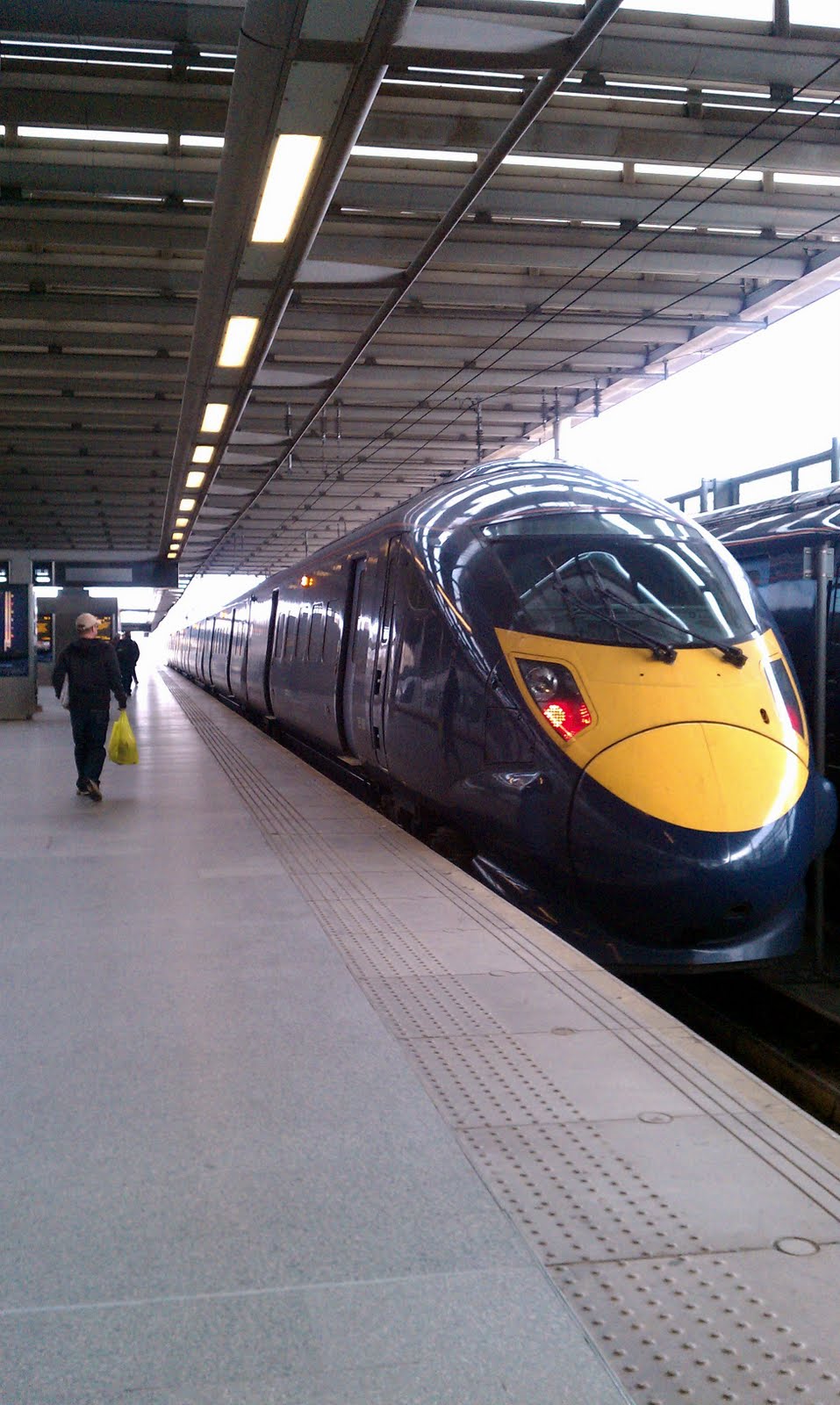
There weren’t too many signs of modernity, and if you closed your ears and didn’t hear the rumble of the cars on the street below, you may as well have been in 19th century Greenwich. My adventure began first thing in the morning and two overground trains and one hour later I was finally, walking up to the Prime Meridian of the World. Longitude 0°00'00'', zero degrees East and West, the spot where every other spot on the world was relative to, well longitudinally speaking. I was moving toward The Constant.
 |
| The Royal Observatory Grounds |
The Royal Observatory commissioned in 1675 by King Charles II is best known as the home to the Prime Meridian. Situated on a hill atop Greenwich Park, it has a stunning view that overlooks the Thames.
 |
| The Flamsteed House |
The Flamsteed House is where the first Royal Astronomer, John Flamsteed lived and studied. The artifacts of his astronomy and navigational discoveries are still in the house. The red ball on the top of the Octagon room, drops everyday at 1 PM. It was the first example of a visual clock ever used.
 |
| The Planetarium |
The Octagon room itself, designed by Christopher Wren is an eight walled atrium of magnificent light. Wall to wall, there are showcases of ancient clocks and telescopes. I could have lived in that room and dreamed all the discoveries they ever made there. Four separate meridians have been drawn through the Royal Observatory, but in 1884 an international conference established the current line as the Prime Meridian of the World. Around the courtyard visitors flocked to straddle and sit on the brass strip.
 |
| The Prime Meridian of theWorld |
Positioning themselves half at zero degrees to the West and half at zero degrees to the East, they photographed their feet and their hands, hopping back and forth over the boundary chanting “east-west-east-west.” I admittedly participated in the ritual as well.
 |
Longitude 0°00'00'' |
 |
| Los Angeles! |
The building adjacent to it had a sign that read “The Prime Meridian of the World.” Above it was a square hole that beamed a laser line to mark the Prime Meridian, it was the most modern addition to this historical site in a long time. A large clock that was always set to “Greenwich Mean Time (GMT)" stood outside the entrance. Below it were the standard units of measurement on steel plates that are still used today. There was so much history here. But so much relativity as well. There was nothing magic about the line except that it needed to start somewhere. Sailors used the equator to navigate North and South, the latitude lines, but until the standardization of the Prime Meridian they had no longitudinal constant, so this is where they chose to start it from. Time and space really were relative. Afterall, clocks would be moving ahead by an hour in a few days, but only in some parts of the world, not others. Every time else would be relative to that time change. Its amazing how we mortals play with time like that, but that's the beauty of it, time and space are malleable concepts, how we map it and mold it are simply based on our understanding of it at the time.
 |
| The Prime Meridian of the World |
 |
| Marks the spot |
Schoolchildren on class trips, ran around the courtyard. They had their own theories about space and time, most of it based on video games, but nonetheless they seemed eager to learn. I could only imagine what advancements of space and astronomy they would see in their lifetimes. Perhaps things I couldn't even imagine yet. The planetarium behind the Observatory showcased interactive media on stars and the solar system and films on the origins of the universe.Displays of math and physics and the famous astronomers who discovered them, covered the walls and lured the curious minded. There were early telescopes, large and small. Giant clocks with intricate dials and pocket sized ones that could be tucked away. There were nautical navigation systems and primitive communication phones, maps of the stars and the seas, orbs of lines and measurements, arcs, and compasses, all quietly shelved, holding their secrets in their silence.
 An entire room was made into a camera obscura. The blackened rotunda let no light in. A long, thin shaft rose through to the roof and ended in a lens. It let in only a silver a light. Focused toward the direction of the Queen’s House, it reflected a black and white image on a table below. This was one of my favorite rooms.
 |
| Camera Obscura Room |
As I imagined what it must have been like to study the abstract concepts of time, space and navigation with what was akin to primitive equipment, I slowly realized these tools were not primitive at all.
The coordinated systems of latitude and longitude based on pendulums, almanacs and the degree of the sun above the horizon, were the resilient testament of a sophisticated thought and theory in the 19th century. These blocks of wood and hunks of metal were the equivalent of computers in our day.
 |
| View from the top |
The creation of modern day navigation systems was sprung from the evolution of these designs. Rooted in the burgeoning math and physics of the era, they looked to celestial skies to map the world and to travel it. What an amazing achievement that any ship made it to their port of destination and back in those days. Navigating on a featureless sea was a heroic feat and one I didn't think to give much credit for until today.
 |
| Schoolchildren |
As I moved from exhibit to exhibit, display to display ooh-ing and ahh-ing along with 5th and 6th graders, I stopped a moment and walked back to the Line, and stood there. I was at point zero, the fixed point.
 |
| The Gibeon Meteorite |
Here on these historical grounds, astronomers long dead, studied the mysteries of time and space with simple tools based on ancient concepts. They mapped the stars, they navigated the seas, they calculated the time. They knew how to find themselves by the lights in the sky and where they were in the world at any given moment of the day just by looking at the way the sun moved on the horizon.
 |
| The Walk Up |
Their nascent tools were the evolutionary blueprint of our modern GPS, the one we take for granted everyday in our cars and phones. What they found then, has helped us find our ever since.
 Standing on The Line surrounded by the legacy of a long forgotten time, amidst the aboriginal tools of wooden telescopes and weighted pendulum clocks, there was no present, or future, just the past rolling over and over again. It was the first time I ever stood in this place and who knew if I would ever stand here again, or if I had not already stood here a thousand times before.
 Standing atop a green hill overlooking a timeless river, the view of the houses of Kings and Queens that once ruled the land, lay stately below, the descending clouds that brought the rain, the blossoming sun that begged them away, moved playfully above, and I stood at the fixed point of the world, turning in time towards the future, revolving away into the past, moving at the speed of light.
 |
| The Thames in the distance |
Finite in form, infinite in being, I was an insignificant moment in an eternal time, a single lie in the infinite truth, I was a piece of time and starlight with nowhere to go but here. Gases to gases, stardust to stardust, evolving and revolving, turning and returning, spiraling around the fixed point of the world. I was the beginning and the end. I was everything and I was nothing all at once.
 |
| The walk back down |
 |
| The DLR to Greenwich |
There was a greatness and a humility here that moved beyond the trappings of tourism or even the Meridian itself. It was a place of reverence and discovery like the ancient pyramids were to the Mayans and Egyptians. It was a place where man long ago, and man now, captured the light, harnessed the stars, contained all time and then let them go. I could not help but be transformed by it.
I took my time walking back down the hill, savoring every last moment of the day. I didn’t bother looking at my watch. I was certain I wouldn’t miss my any of my trains, I was after all, in the place where time stood still.
 |
| Downtown Greenwich |
 |
| The Maritime Museum |
 |
| "Come back soon. There is so much more to learn." |


 An entire room was made into a camera obscura. The blackened rotunda let no light in. A long, thin shaft rose through to the roof and ended in a lens. It let in only a silver a light. Focused toward the direction of the Queen’s House, it reflected a black and white image on a table below. This was one of my favorite rooms.


 Standing on The Line surrounded by the legacy of a long forgotten time, amidst the aboriginal tools of wooden telescopes and weighted pendulum clocks, there was no present, or future, just the past rolling over and over again. It was the first time I ever stood in this place and who knew if I would ever stand here again, or if I had not already stood here a thousand times before.
 Standing atop a green hill overlooking a timeless river, the view of the houses of Kings and Queens that once ruled the land, lay stately below, the descending clouds that brought the rain, the blossoming sun that begged them away, moved playfully above, and I stood at the fixed point of the world, turning in time towards the future, revolving away into the past, moving at the speed of light.